
The Complexity of Ceramics Processing
Ceramic materials are revered for their extreme hardness and high temperature resistance, properties that follow from the chemical composition and interatomic bonding (see The expanse of advanced ceramics). However, these same properties that make them so useful create significant challenges for ceramic shaping operations: they cannot be cast, drawn, or processed in the molten or semi-molten state, as is common with metals and polymers. Instead, ceramics are typically shaped via a powder route, where the powdered ceramic is formed into the desired geometry before thermal processing, or sintering, fuses the particles into a ceramic solid.
This is a multi-stage process with inherent complexity: powder production, material formulation, shaping, post-processing, thermal processing. Each stage has a range of variables that can be adjusted to affect the end result, and these parameters are often interdependent. A prime example is particle size: smaller particles are significantly more reactive during sintering¹, resulting in denser sintered ceramics and (usually!) improved properties. However, smaller particles are harder to process and shape, as they have a tendency to stick together, or agglomerate. It is this process complexity which, historically, has limited the application of advanced ceramic materials and, more recently, limited the industrial uptake of ceramic additive manufacturing methods.
Furthermore, the process to design a functional ceramic component is necessarily application driven. One must start with the requirements of the product then work backwards to determine geometry and material to suit the application. For example, consider the example of the coffee cup, starting with the core requirements of the finished product:
"I need something to hold this delicious hot liquid so that I may drink it."
From this statement, we can derive several requirements about both geometry and material.
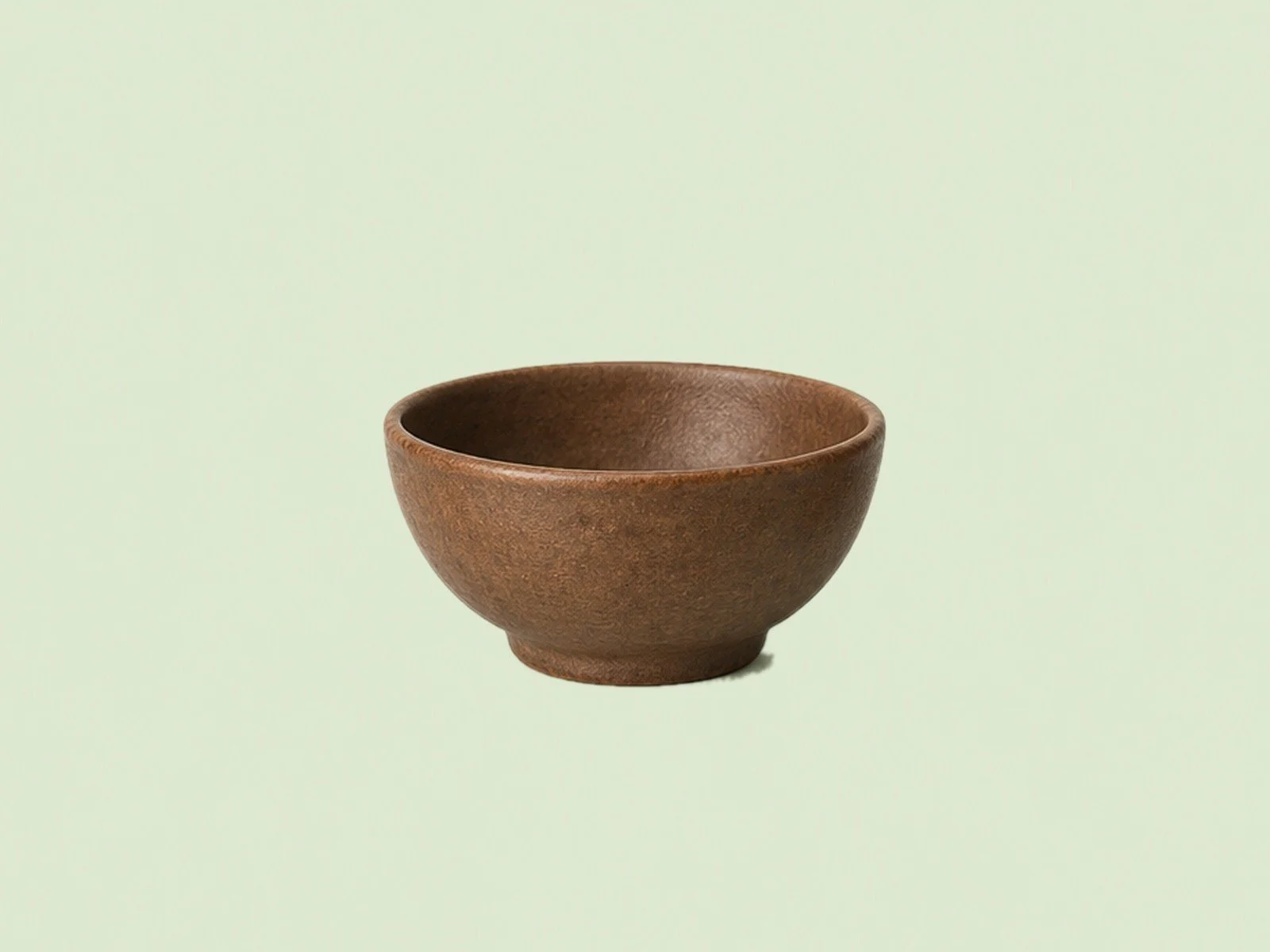
“The shape must be suitable to hold a liquid.”
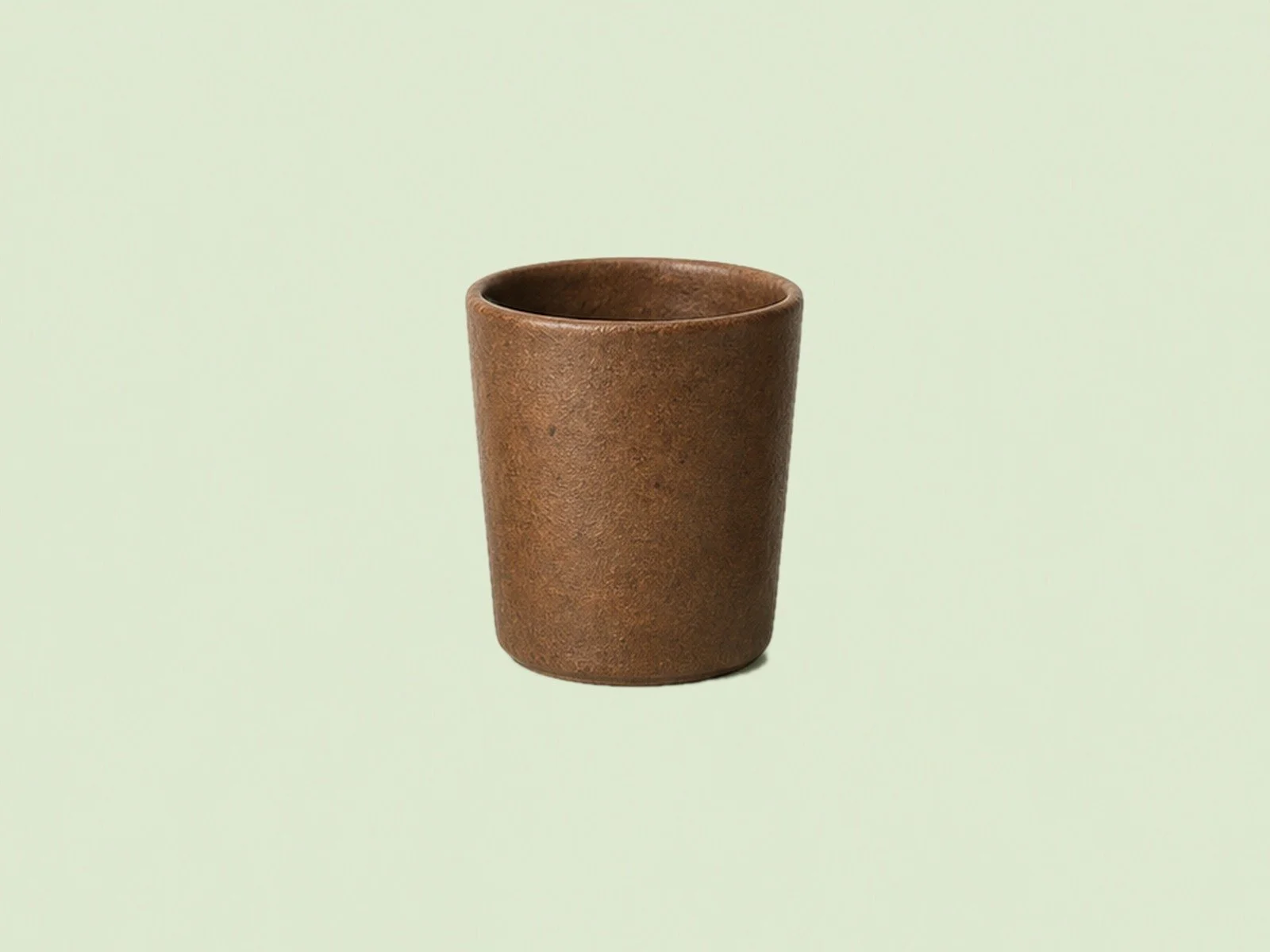
“Actually, taller sides would be better to prevent spillage.”

“Good, now how will I hold this without burning my fingers?”
“Nice.”
This simple example demonstrates how the geometry of a functional component is derived from the product specification. The same is true of the material properties: in this case, the material must be insoluble, or it would dissolve; it must be flavourless, so as not to affect the taste of the beverage; and it must have a low thermal conductivity, so that the drink stays hot.2 These are common properties of ceramic materials, justifying their popular use in this application. However, producing components with the desired properties often relies on years of empirical process development and a rigorously controlled manufacturing process, considering every stage of the ceramic manufacturing workflow outlined above.
So the requirements of the final product determine what shape it will be and what it will be made from. These requirements are then used to design the entire processing route: the shape dictates the suitable shaping method, which determines the material formulation, while the material requirements dictate the choice of ceramic powder and the thermal processing conditions, themselves with further implications for the formulation. In short, the entire processing chain, in all its complexity, must be designed and controlled to produce a finished product with the desired functional properties.
With this in mind, the challenges associated with ceramic AM become clear, frequently cited as being around a decade behind AM for metals and polymers. Many approaches to ceramic AM have used existing processes, designed around metals and polymers, and adapted the feedstock materials to incorporate ceramic particles, imposing significant challenges on the control of the material system. Hydra took a fundamentally different approach, stay tuned to learn more.
Science Corner
Footnotes for those curious about the science. Be warned: the complexity of ceramic materials often demands caveats in caveats!
[1] Smaller particles have more reactive surfaces (easier to sinter and more likely to agglomerate) because they have higher specific surface energy due to an increase in the ratio of surface to bulk atoms in the ceramic powder system.
[2] Ceramics have a low thermal conductivity or heat transfer coefficient because they (generally!) do not have free electrons to carry the heat. Also, the microstructure (with pores (air gaps)) and grain boundaries break up thermal conduction pathways.
